How Much Insurance Coverage Does A Luxury Watch Collection Actually Need To Carry?
Homeowners policies rarely protect a serious watch the way owners assume. Here is how to decide between a scheduled rider and a standalone policy, and how to value what you own.
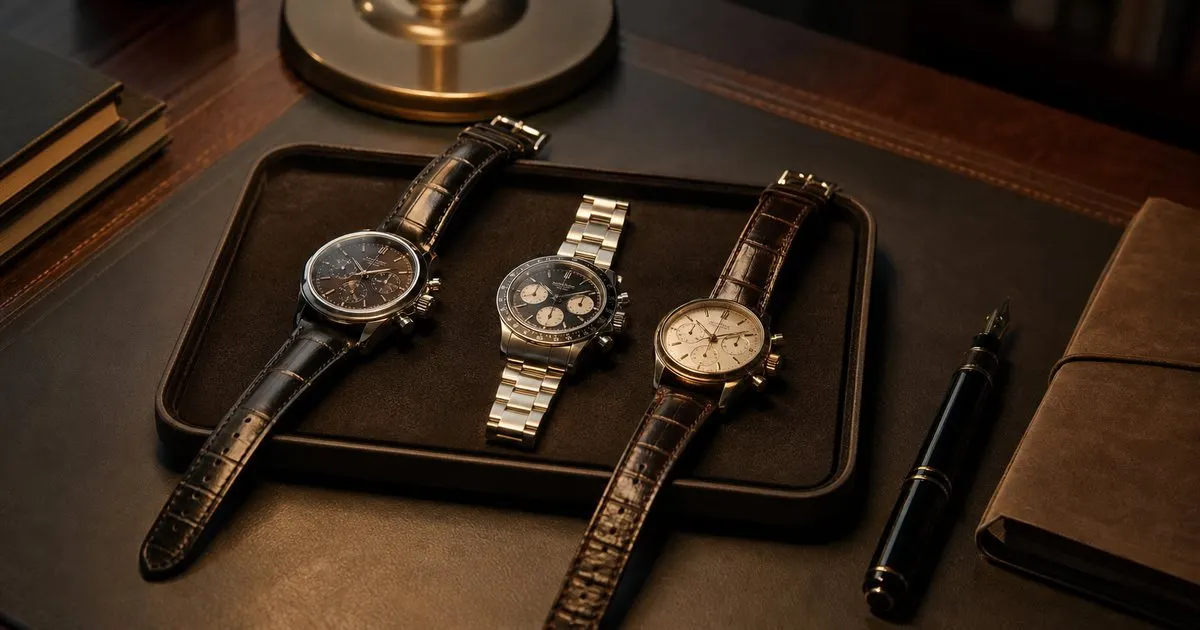
Why a standard homeowners policy usually falls short
Most homeowners and renters policies include personal property coverage, but they typically cap jewelry and watches at a modest sub-limit for theft, and that cap often covers the entire category, not each item. A single watch in the five to fifteen thousand dollar range can exceed the sub-limit on its own. Policies also tend to exclude or limit mysterious disappearance, meaning a watch that simply vanishes, without evidence of burglary, may not be covered at all. Deductibles apply, and a claim can affect your premium on the entire home policy.
Coverage away from home is another gap. Many base policies reduce or exclude coverage for property outside the residence, which is precisely where a watch spends its life. Before assuming you are covered, read the personal property section of your declarations page and the definitions of jewelry, theft, and off-premises coverage. If the numbers do not add up to the replacement value of your most valuable watch, you are underinsured, and it is far better to discover that now than after a loss. Related: What Determines Whether A Fine Watch Will Hold Its Value Over Time?
Keep reading: How Should A New Collector Begin Building A Serious Luxury Watch Collection?, What Determines Whether A Fine Watch Will Hold Its Value Over Time?, How Do You Authenticate A Luxury Watch Before Making A Significant Purchase?. See how Chronoholm helps you a collector guide to buying fine and luxury watches.
Scheduled riders versus standalone collector policies
The first upgrade is a scheduled personal property endorsement, sometimes called a rider or floater, added to your existing home policy. Each watch is listed individually with an agreed or appraised value. Scheduled items usually enjoy broader coverage, including loss and mysterious disappearance, often with no deductible, and worldwide protection. The trade-off is that a claim still sits on your home policy, and some insurers require an appraisal for every item above a threshold. Related: How Should A New Collector Begin Building A Serious Luxury Watch Collection?
A standalone policy from a specialty insurer that focuses on jewelry, watches, and collectibles is the other route. These policies are written around how collectors actually live: they tend to handle agreed value more flexibly, allow you to add and remove pieces as the collection changes, and keep claims separate from your home coverage. For a collection of several watches in this range, the specialty route is typically worth a quote. Ask specifically about coverage during shipping, at watch events, and while a piece is at a service center.
Valuing the collection correctly
The number you insure for should be replacement cost, not what you paid. For a current production watch that is retail price plus tax; for a discontinued or sought-after reference that is what it would cost to buy an equivalent example on the secondary market today. Values move, sometimes sharply, so a figure set three years ago may be well off in either direction. Over-insuring wastes premium; under-insuring leaves you paying the difference after a loss.
Insurers generally accept a recent purchase receipt for new watches and an appraisal from a qualified watch appraiser for pre-owned or older pieces. Keep a simple inventory: reference and serial numbers, purchase date and price, current insured value, and photographs of the watch, the case-back, the box, and the papers. Store copies off-site or in a secure cloud folder. Review values annually and after any notable market movement, and update the schedule whenever a watch enters or leaves the collection. Related: How Do You Authenticate A Luxury Watch Before Making A Significant Purchase?
Reducing risk so you rarely need to claim
Insurance is the backstop, not the plan. A home safe that is bolted down and rated for burglary rather than only fire is the baseline; many insurers offer better terms when a safe is in place. Do not keep every watch in the same location, and avoid photographing your collection in a way that reveals your address or routine on public platforms. When a watch is being serviced, confirm in writing who carries the risk while it is in transit and on the bench.
Wear habits matter as much as storage. Be deliberate about which watch travels with you and where; a bracelet with a secure clasp is harder to lose than a pin buckle in a crowd. If you sell a piece, remove it from the schedule promptly to stop paying for it. And read the claim procedure before you need it, since insurers usually expect prompt notice, a police report for theft, and the documentation you assembled above. A collector who has done this work sleeps considerably better. Related: Which Complications Are Worth Paying For In A Collector Grade Timepiece?
- Standard homeowners policies typically cap watches at a modest sub-limit and may exclude losses away from home or without evidence of theft.
- Scheduled riders and standalone collector policies list each watch at an agreed value and usually cover loss, disappearance, and worldwide wear.
- Insure for current replacement cost, supported by receipts or a qualified appraisal, and review values every year.
- A rated, bolted safe, careful travel habits, and a documented inventory reduce both risk and premium.

Julien Jimenez
Julien Jimenez is an independent software builder based in Paris. He designs, ships, and operates focused SaaS products for small businesses and independent professionals. Read the full author page.
Collect with Knowledge and Patience
A collector guide to buying fine and luxury watches. Chronoholm is built to help you put this into practice.
Start collectingMore from the Chronoholm blog
How Should A New Collector Begin Building A Serious Luxury Watch Collection?
What Determines Whether A Fine Watch Will Hold Its Value Over Time?
How Do You Authenticate A Luxury Watch Before Making A Significant Purchase?
Get the complete fine and luxury watches guide
Our full buying guide, the price guide, and new research as we publish it. One email, no spam, unsubscribe any time.