Where Should A Collector Keep Watches At Home When A Bank Vault Is Not Practical?
Most serious collections live in the owner's house rather than a vault, and the storage decision quietly determines how much risk you carry. Here is how to choose a safe, organize daily storage, and stay discreet.
The Threats A Home Collection Actually Faces
Collectors tend to picture a dramatic targeted theft, but the ordinary risk is far less cinematic. Most household losses come from fast opportunistic burglaries in which someone spends only a few minutes inside, heads directly for the master bedroom, and takes small dense valuables from the obvious places: the nightstand, the dresser drawer, the closet shelf, the jewelry box. A collection stored in any of those locations is effectively unprotected regardless of what it cost. Storage strategy begins by accepting that the first search is predictable and planning against it. Related: How Should A New Collector Begin Building A Serious Luxury Watch Collection?
The second category of risk is environmental and much more common than theft in absolute terms. Fire, a burst pipe above a closet, and long term humidity all damage watches quietly. Leather straps mildew or dry out, dials can spot, and moisture that finds its way past aging gaskets can cause corrosion that is expensive to reverse. A third category is human rather than physical: household staff, contractors, houseguests, and casual conversation. Anyone who knows the collection exists and knows roughly where it lives is part of your risk profile, usually without any bad intent at all.
Keep reading: How Should A New Collector Begin Building A Serious Luxury Watch Collection?, What Determines Whether A Fine Watch Will Hold Its Value Over Time?, How Do You Authenticate A Luxury Watch Before Making A Significant Purchase?. See how Chronoholm helps you a collector guide to buying fine and luxury watches.
Choosing A Safe That Buys Real Time
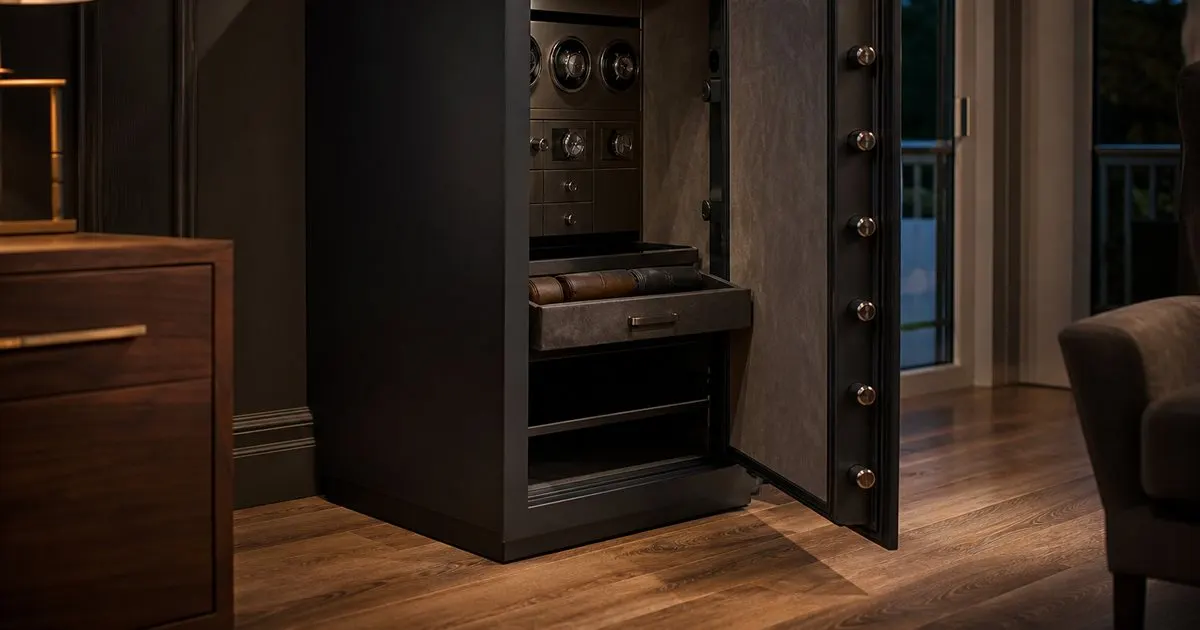
The value of a safe is measured in the minutes it takes a determined person to defeat it, and weight is the single most important variable. A light container simply gets carried out and opened elsewhere, so anything under a few hundred pounds must be bolted through the floor or into structural framing. Look for independently tested burglary classifications rather than marketing language, since ratings for residential security containers and the tougher tool resistant classes describe verified attack testing. Note that fire ratings and burglary ratings are separate claims. A box that survives an hour of fire may open in seconds under a pry bar.
Placement matters as much as specification. A safe installed in the master bedroom sits exactly where the search begins, while a unit anchored in a basement corner, a utility room, or a purpose built closet on a lower floor buys both time and obscurity. Consider access as well as resistance: a mechanical dial is slow but immune to dead batteries, while a quality electronic lock is faster for a watch you wear daily. Line the interior with soft cloth or fitted trays, keep silica or a small dehumidifying unit inside, and resist the temptation to store the collection alongside documents you open constantly, since every opening is an opportunity for someone to observe the routine. Related: What Determines Whether A Fine Watch Will Hold Its Value Over Time?
Daily Storage, Winders, And Climate
A serious collection needs two tiers of storage: the secured tier for pieces you are not wearing, and a working tier for the watch in rotation. Individual leather or suede rolls and felt lined trays prevent bracelet links from scratching neighboring cases, which is the most common self inflicted damage in a collection. Keep watches out of direct sunlight, since sustained ultraviolet exposure can fade a dial and age a strap far faster than wear does. A moderate indoor relative humidity, roughly the middle band most homes maintain for comfort, suits both movements and leather.
Winders are widely misunderstood. They are genuinely useful for a perpetual calendar, an annual calendar, or any watch whose date and moon phase sequence is tedious to reset, and they are largely unnecessary for a simple three hand automatic that takes thirty seconds to restart. If you do use one, match the rotation direction and daily turn count to what the caliber calls for rather than leaving a generic setting running continuously. A quality winder rests between cycles. Cheap units that spin constantly add wear without benefit, and a watch left stopped in a drawer suffers no harm at all provided it is serviced on schedule.
Discretion, Records, And Your Insurer's Expectations
Discretion is a security measure with no cost. Avoid posting wrist photographs with recognizable interiors, addresses, or repeated locations, and be careful about geotagged images that establish a pattern. Do not discuss values with contractors or in front of people you do not know well, and think carefully before showing the full collection to visitors. The people most likely to know what you own should be a very short list, and the people who know where it is stored should be shorter still. Related: How Do You Authenticate A Luxury Watch Before Making A Significant Purchase?
Keep records that are useful after a loss rather than pleasant to browse. Photograph each watch from several angles including the case back, record reference and serial numbers, retain purchase invoices and any service paperwork, and store copies somewhere outside the house, whether that means encrypted cloud storage or a copy with your attorney. Insurers commonly ask what security measures are in place, and an anchored, independently rated safe can influence both acceptance and terms on a scheduled personal property policy. Tell your insurer what you actually do rather than what you intend to do, and update the schedule whenever a piece enters or leaves the collection. Related: What Should You Know About Servicing And Caring For A Mechanical Watch?
- Store nothing of value in the master bedroom, where every quick search begins.
- Weight, anchoring, and independently tested burglary ratings matter more than brand claims.
- Winders serve calendar complications; simple automatics are fine left stopped.
- Keep photographs, serials, and invoices copied somewhere outside the house.

Julien Jimenez
Julien Jimenez is an independent software builder based in Paris. He designs, ships, and operates focused SaaS products for small businesses and independent professionals. Read the full author page.
Collect with Knowledge and Patience
A collector guide to buying fine and luxury watches. Chronoholm is built to help you put this into practice.
Start collectingMore from the Chronoholm blog
How Should A New Collector Begin Building A Serious Luxury Watch Collection?
What Determines Whether A Fine Watch Will Hold Its Value Over Time?
How Do You Authenticate A Luxury Watch Before Making A Significant Purchase?
Get the complete fine and luxury watches guide
Our full buying guide, the price guide, and new research as we publish it. One email, no spam, unsubscribe any time.